The United States is set to suspend port fees for one year on vessels linked to China, beginning next week, in a move aimed at easing tensions between the world’s two largest economies. The decision marks a significant step in the broader effort to deescalate a simmering maritime dispute that had become a flashpoint in the U.S.–China trade conflict.
According to a White House fact sheet released Friday, the suspension will take effect on November 10 and temporarily halt a series of measures introduced to curb China’s influence in global shipping and shipbuilding industries. The decision comes as Washington and Beijing attempt to stabilize their trade relationship following months of strained negotiations.
China responded swiftly, announcing it would suspend its own countermeasures that had been imposed on U.S.-affiliated shipping in retaliation for Washington’s earlier restrictions. Beijing described the move as a “constructive and reciprocal step” toward normalizing maritime cooperation and restoring trade predictability.
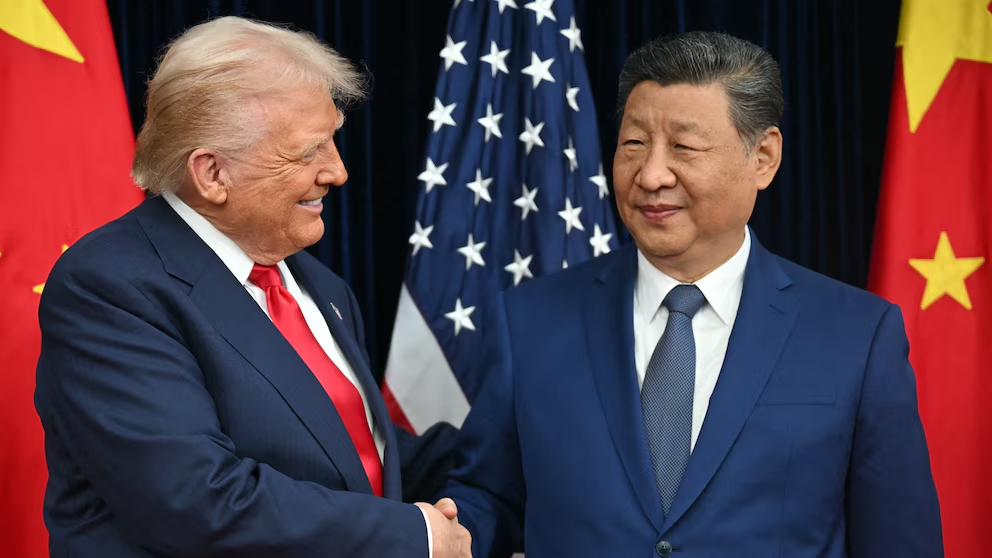
The announcements follow last week’s high-profile summit between President Donald Trump and Chinese President Xi Jinping, where both leaders agreed to a limited trade truce covering a range of contentious sectors — including semiconductors, agricultural exports, rare earth minerals, and shipping logistics.
For months, the mutual imposition of port fees had disrupted international shipping routes and raised global freight rates. Industry analysts warned that the standoff threatened to upend the global supply chain, impacting the movement of key commodities such as oil, coal, and grain.
“The suspension provides much-needed relief to global shippers,” said a senior logistics executive familiar with the talks. “Freight costs had been climbing for months due to the uncertainty over access fees and port restrictions.”
Under the one-year suspension, the United States plans to use the pause to negotiate further maritime terms with China, focusing particularly on the results of a U.S. Commerce Department investigation into Beijing’s dominance in the global shipbuilding sector. The inquiry, launched earlier this year, accused China of unfair subsidies and state-backed investments that distorted market competition.
In addition to talks with Beijing, Washington intends to deepen cooperation with key U.S. allies in the Indo-Pacific region, including South Korea and Japan, to strengthen shipbuilding partnerships and balance China’s expanding industrial presence. The administration emphasized that such cooperation is essential to preserving open and secure maritime trade routes.
While the agreement signals a rare moment of calm in an otherwise turbulent trade relationship, analysts caution that it may prove temporary. The year-long suspension gives negotiators breathing room but leaves unresolved deeper structural disputes between the two powers — particularly over industrial policy, market access, and maritime security.
“The truce is a positive gesture, but it’s a ceasefire, not a peace treaty,” said one trade analyst based in Washington. “Both sides have agreed to hit pause, but the underlying competition — especially in advanced manufacturing and logistics — remains as fierce as ever.”
The U.S. shipping sector has largely welcomed the decision, noting that reduced fees will help offset rising operational costs caused by tariffs and inflation. Meanwhile, international trade organizations have urged both governments to use the next 12 months to pursue “lasting and transparent frameworks” that promote fair maritime competition.
For Beijing, the move offers both practical and symbolic benefits. Chinese shipbuilders have faced mounting pressure from U.S. sanctions and restrictions on advanced technology exports, while domestic shipping firms have struggled with higher port costs abroad. The rollback of fees could help stabilize those sectors ahead of next year’s expected global trade rebound.
At the same time, the White House framed the decision as a pragmatic step, not a concession. Officials stressed that the suspension allows the U.S. to gather more evidence about China’s industrial practices while keeping leverage for future negotiations.
The temporary détente underscores a broader trend in U.S.–China relations: competitive coexistence. Both sides continue to view each other as economic rivals, yet remain intertwined through global trade and supply chains.
As one senior administration official summarized, “This isn’t about surrendering leverage — it’s about buying time to reset the terms of competition.”