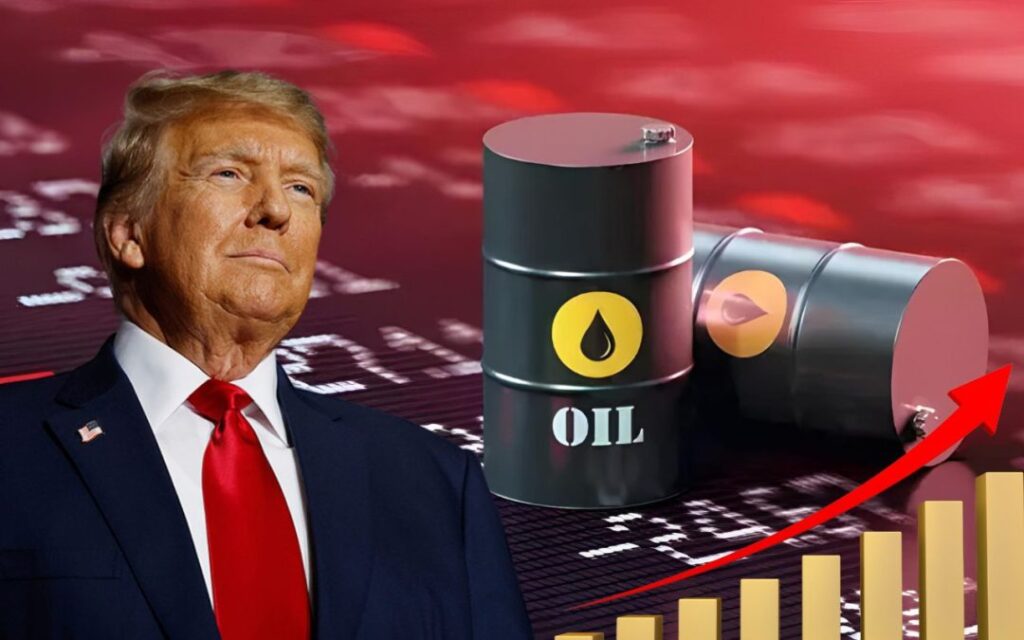
In a surprise move, U.S. President Donald Trump announced sweeping sanctions on Russia’s two largest oil companies Rosneft and Lukoil, intensifying pressure on Moscow over its ongoing war in Ukraine. The sanctions, unveiled by the U.S. Treasury Department on Thursday, caused global oil prices to jump by 3% and prompted India to consider cutting its imports of Russian crude.
The action marks a sharp reversal for Trump, who only last week had signaled plans to meet Russian President Vladimir Putin in Budapest to discuss ending the war. On Wednesday, however, Trump abruptly cancelled the summit, saying he no longer believed it would deliver meaningful progress.
“It just didn’t feel right,” Trump told reporters at the White House. “We weren’t going to get where we need to be, so I cancelled it, for now.”
Washington Targets Russia’s War Funding
Treasury Secretary Scott Bessent said the move was aimed squarely at cutting off Moscow’s ability to finance its invasion.
“Given President Putin’s refusal to end this senseless war, Treasury is sanctioning Russia’s two largest oil companies that fund the Kremlin’s war machine,” Bessent said, urging U.S. allies to adopt similar measures.
Russia’s Foreign Ministry condemned the sanctions as “counterproductive,” insisting that its military goals in Ukraine remain unchanged. Oil and gas revenue, which accounts for roughly a quarter of Russia’s budget, has already fallen by 21% year-on-year. However, because much of Moscow’s income comes from production taxes rather than exports, the immediate fiscal hit may be limited.
Oil Markets React
Ukraine’s President Volodymyr Zelensky welcomed the sanctions as “very important,” but urged Washington and its allies to maintain pressure on Moscow.
Oil markets reacted quickly, with Brent crude climbing more than 3% on fears of supply disruptions. Indian refineries — now the largest buyers of discounted Russian oil — signaled plans to reduce imports to avoid breaching U.S. restrictions.
The Treasury has given companies until November 21 to phase out transactions with the sanctioned firms. Analysts say the new restrictions may force Russia to sell oil at deeper discounts, though higher global prices could cushion the blow to its economy.
Trump’s Shifting Approach to Ukraine
Trump’s decision reflects another shift in his Ukraine policy. After meeting Putin in Alaska in August, he had supported direct peace negotiations over an immediate ceasefire — Moscow’s preferred stance. Recently, however, Trump has once again voiced support for a ceasefire, aligning more closely with Kyiv’s position.
Russia, meanwhile, continues to reject any temporary truce, arguing it would simply allow Ukraine to regroup. Moscow instead advocates for a “comprehensive peace deal,” which Kyiv dismisses as an ultimatum to surrender territory.
Amid the tensions, Russia conducted large-scale nuclear readiness drills on Wednesday — a pointed reminder of its military leverage as the war grinds on.