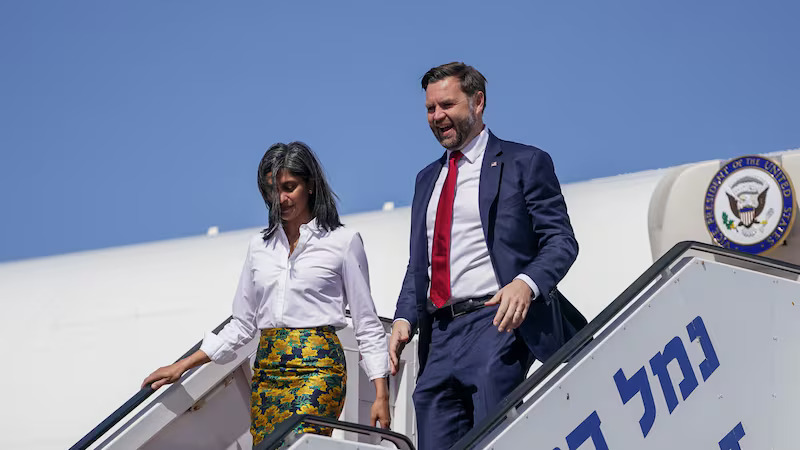
U.S. Vice President JD Vance landed in Israel on Tuesday amid growing tension over the fragile ceasefire between Israel and Hamas, as Washington scrambles to keep the peace deal from falling apart.
The visit comes just days after one of the deadliest flare-ups since the truce began on October 10, when Israeli strikes killed more than 40 Palestinians following the deaths of two Israeli soldiers near Rafah. U.S. officials are increasingly worried that Prime Minister Benjamin Netanyahu may be moving toward reigniting the conflict, despite public commitments to the ceasefire.
Vance’s trip includes meetings with Netanyahu and Israeli President Isaac Herzog in Jerusalem on Wednesday. He is also expected to visit a U.S.-supported task force monitoring the implementation of the Trump-brokered peace plan, which secured the release of all living Israeli hostages in exchange for nearly 2,000 Palestinian detainees.
Senior Trump administration figures Jared Kushner and Steve Witkoff are already in Israel, holding talks with Israeli leaders and former hostages. Their presence, alongside Vance’s arrival, signals growing U.S. pressure on the Netanyahu government to uphold its obligations under the ceasefire.
Egypt’s intelligence chief also arrived in Israel on Tuesday for consultations with Israeli and U.S. officials, underscoring Cairo’s role as a key mediator. Meanwhile, Qatari Emir Sheikh Tamim bin Hamad al-Thani accused Israel of violating the truce after deadly weekend strikes, saying the Gaza Strip has been turned into “an area unfit for human life.”
The humanitarian situation in Gaza remains dire. The United Nations and the World Food Programme warn that famine conditions have emerged in parts of the enclave. Aid deliveries continue to fall far short of targets—less than 1,000 trucks have entered Gaza since the truce took effect, compared with the 6,600 promised.
Hamas says it remains committed to the ceasefire but blames Israel for blocking heavy equipment needed to recover the remains of Israeli hostages. Israel, in turn, accuses Hamas of dragging its feet on the process.
For Washington, sustaining the ceasefire has become both a humanitarian and political imperative. Vance’s presence is intended to reinforce U.S. support for peace and to deter any new military escalation while negotiations over long-term governance in Gaza continue.
As Abeer Etefa, the WFP’s Middle East spokeswoman, put it: “Sustaining the ceasefire is vital—really, it’s the only way we can save lives.”