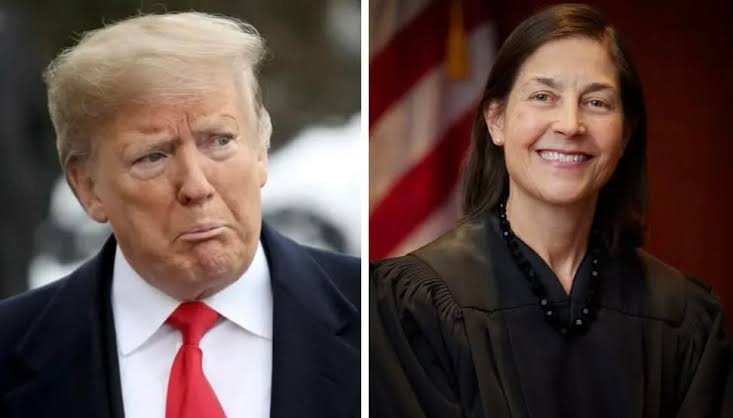
A federal judge in Oregon has issued a temporary restraining order preventing President Trump from sending Oregon National Guard soldiers to Portland to assist at an ICE facility during nightly protests. Judge Karin Immergut agreed with state officials who argued that the deployment would exceed the president’s constitutional powers and infringe on state authority.
The order, handed down on a Saturday, applies to the president’s plan to mobilize 200 soldiers for a 60-day mission. These troops had been undergoing training on the Oregon coast and were expected to be operational by the weekend. But under the restraining order, they cannot be deployed to Portland during the two-week period in which the order remains in effect.
Oregon and Portland’s governments had challenged the deployment, asserting that using National Guard personnel for local crowd control or law enforcement tasks violates both constitutional boundaries and the Tenth Amendment. Judge Immergut indicated in her opinion that she expects a full trial will side with those arguments, finding that the president overstepped his authority.
Attorneys for Oregon contended in court that the federal government lacked legal justification to dispatch military forces to the ICE facility. They warned that such action would likely escalate tensions rather than restore order. State lawyers also characterized the federal move as politically motivated retaliation against liberal state and city policies.
In presenting their case, Oregon’s legal team emphasized that the protests at the ICE building had diminished in intensity in days and weeks before the president’s directive. Records from local authorities reportedly showed that the number of demonstrators and the level of disruption had fallen, undermining the administration’s justification for a military response.
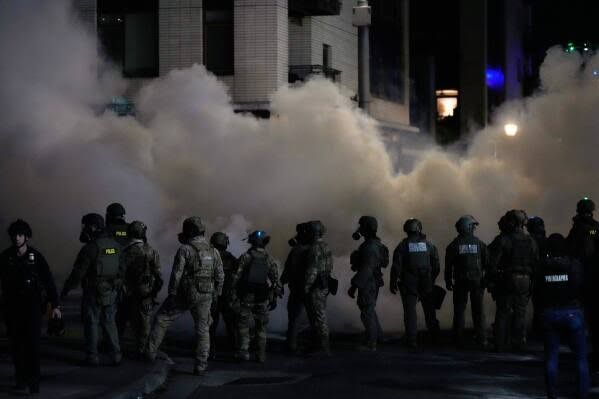
Judge Immergut echoed that reasoning. She observed that the state had provided “substantial evidence” undermining the claim that the protest activity had become unmanageable or violent enough to warrant military intervention. She also noted that the timing of the presidential order cast doubt on its legitimacy.
Federal legal counsel pushed back, arguing that the protests and clashes with federal agents rose to the level of a rebellion or an insurrection, thereby justifying federal troops under laws governing domestic enforcement. They contended that federal law enforcement alone was not sufficient to protect federal property and employees in Portland.
But defense attorneys for Oregon countered that such a broad interpretation of “rebellion” would dangerously expand federal power over all forms of political protest. They argued that the Trump administration’s reasoning would give the presidency unilateral authority to deploy military forces during any politically charged demonstrations.
Judge Immergut sided with the state on that point, stating that evidence of “sporadic violence” did not support a finding of an organized effort to overthrow or imperil government authority. She found no proof that the protests, while sometimes confrontational, rose to the constitutional threshold required to bring in federal troops.
The judge was also critical of the federal government’s claim that protests justified the deployment when local law enforcement and federal agents were reportedly managing the demonstrations without needing the Guard. The state had submitted records showing coordination between Portland police and ICE officials and a largely calm situation in the days before the presidential announcement.
In her ruling, Judge Immergut remarked that the administration’s argument was contradicted by evidence of comparatively quiet protest activity, which supported the claim that the deployment was not “conceived in good faith.” In her view, the decision to send Guard troops appeared to rely more on political motives than legal necessity.
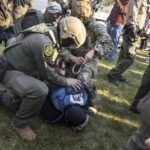
Protests outside the ICE building in Portland began during the summer and have, at times, included confrontations between demonstrators and federal agents attempting to control vehicle access. The regular crowds often disperse quickly during the day, but federal agents have used crowd control measures such as tear gas and pepper balls when tensions rise.
In recent months, the demonstration activity around the facility has included arrests and sharp exchanges, with protesters seeking to impede vehicle traffic. On some occasions, counterprotesters aligned with right-wing causes have appeared, adding to the volatility around the site. The presence of federal officers launching enforcement actions against protesters has deepened the tensions.
While the restraining order only lasts for two weeks, in that time the court will consider a request for a broader and longer injunction. Meanwhile, federal lawyers have already appealed Judge Immergut’s order and signaled their belief that higher courts will overturn it.
The decision in Oregon is part of a broader push by the Trump administration to deploy National Guard troops in various U.S. cities, including an announced plan to send 300 Guard members to Chicago. The Oregon ruling raises serious constitutional questions about the balance of power between the presidency and state governments when dealing with protests and domestic security operations.