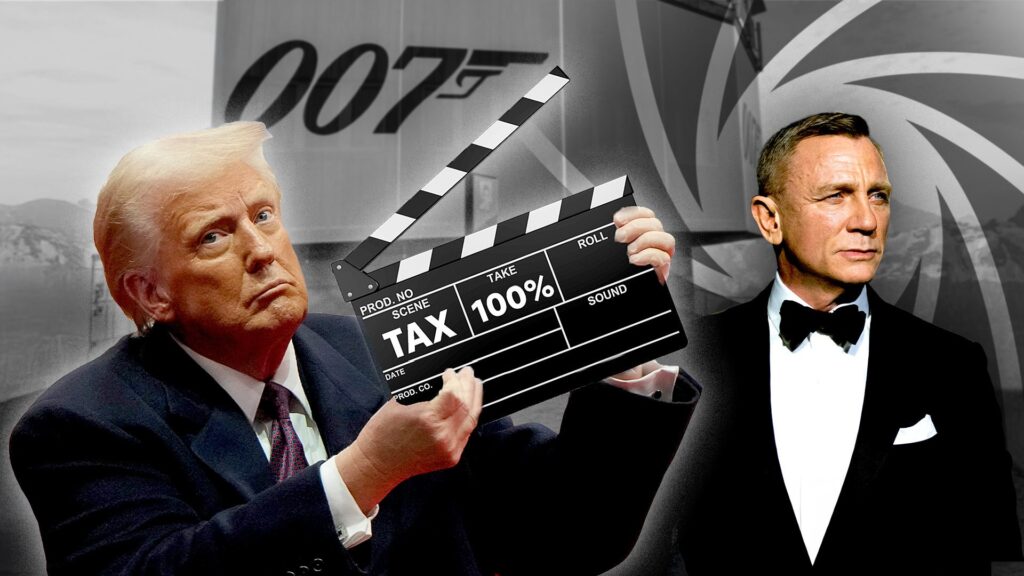
President Donald Trump has reignited his push to slap a 100% tariff on movies made outside the United States, a move he insists will protect American filmmakers and bring jobs back to Hollywood. The latest warning, shared on Truth Social within the past few hours, has sent shockwaves through both the entertainment industry and international trade circles.
Trump claimed that foreign productions are undermining U.S. studios and vowed to take decisive action to “level the playing field.” He also hinted at expanding his tariff strategy to include other goods, such as imported furniture. The announcement marks the second time this year the president has threatened to tax foreign films, though no formal policy has yet been rolled out.
Legal and Practical Doubts
Despite the strong rhetoric, experts stress that the path forward is highly uncertain. Films are often treated under U.S. law as intellectual property or services, not traditional goods subject to customs duties. That legal gray area raises serious questions about whether the president has the authority to impose such sweeping tariffs without Congress.
Adding to the complexity, modern filmmaking is rarely confined to one country. Many blockbusters are co-productions involving international funding, overseas studios for special effects, and filming locations across multiple continents. Determining which projects “count” as foreign-made — and how tariffs would be applied — could prove nearly impossible.
Industry Concerns and Global Risks
Hollywood leaders and trade groups reacted quickly, warning that the plan could destabilize a global industry built on cross-border collaboration. U.S. studios often rely on foreign partners for everything from financing to distribution, and a sudden tariff could drive up production costs, delay releases, and ultimately raise ticket prices for American audiences.
International partners are also watching closely. Countries such as Canada, the U.K., and Australia, all major film production hubs, may retaliate with their own restrictions or tariffs on U.S. entertainment exports. Such a move risks escalating into a cultural and trade dispute with far-reaching consequences.
What Comes Next
For now, Trump has offered no timetable or specific plan for rolling out the 100% tariff, leaving studios, streaming platforms, and foreign partners in limbo. The White House has not clarified whether the measure would apply to digital streaming platforms, theatrical releases, or both.
As the president doubles down on his tariff threats, the entertainment industry finds itself bracing for potential disruption. Whether this marks a genuine policy shift or another high-stakes negotiating tactic remains to be seen.